 |
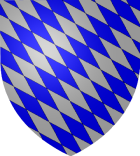
Ludwig III of Bavaria |
|
|---|
|
Ludwig III of Bavaria |
|
|---|
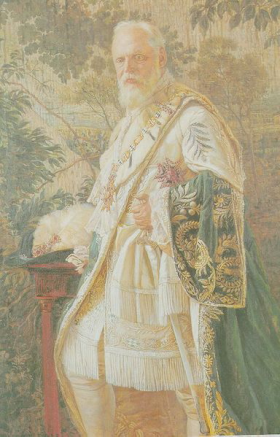
The Man
Ludwig III was the last King of Bavaria for 1913 to 1918. He was born January 7, 1845 in Munich. Ludwig III was also named for his grandfather, King Ludwig I of Bavaria. Joining the military at 16, he and Bavaria were part of the Austrain Empire in the Austro-Prussian War in 1866. He was wounded in the thigh during the Battle of Helmstedt, and was awarded the Knight's Cross 1st Class of the Bavarian Military Order of Merit.
Part of his marriage to Maria Theresa, Archduchess of Austria-Este required Ludwig III to renounce his rights to the Greek throne. Although his uncle Otto had been deposed at the King of Greece, Ludwig III was in the line of succession. Becoming the King of Greece required becoming a Greek Orthodox, but Maria Theresa's staunch Catholic father refused to allow the chance his grandchildren not be raised Catholic. They had thirteen children in their devoted, happy marriage.
Some trivia: Maria Theresa's uncle Francis was the claimed Jacobite King of England. After his death in 1875, she became heir to the throne of England. Jacobites called her Queen Mary IV and III or Queen Mary III.
The Farmer
With the marriage to Maria Theresa came wealth. Ludwig III purchased and estate at Leutstetten in Bavaria were he and Maria Theresa had their primary residence. The estate was expanded by Ludwig III and it bacame one of the largest and most profitable in Bavaria.
From 1868, Ludwig III was Honorary President of the Central Committee of the Bavarian Agricultural Society. His interest in agriculture included the technology of water power. The resulted in his initiation of the Bavarian Canal Society in 1891.
The short reign of Ludwig III was heavily influenced by the Catholic encyclical "Rerum Novarum" or "Of New Things". His conservative approach had him named "Millibauer" or "Dairy Farmer", which was a way of saying he was more interested in farming than the country. Further unpopularity came during World War I were Ludwig III was seen to be too loyal to Prussia. As World War I was ending, a revolution broke out in Bavaria. Fleeing the Communists, Ludwig III signed a document releasing civil and military officers from their oaths on November 13, 1918. This was taken as an abdication by the newly formed government.